Automation Starts with the Right Foundation
In the window frame industry, production is no longer just about machines. The real strength lies in how information flows through the process—from the moment an order is recorded to the production and delivery of the frame. When this flow of information is organised efficiently, it creates calm, speed, and reliability on the shop floor. Increasingly, frame manufacturers choose an approach in which data directly forms the basis for production. Not by adding extra steps, but by logically connecting the steps that already exist.
One Input, Multiple Applications
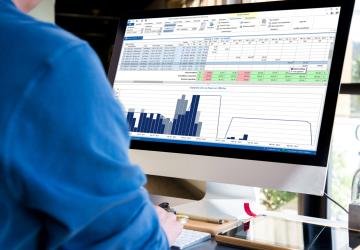
The power of automation lies in recording data only once. MatrixKozijn Project forms the central foundation from the very beginning. When a frame is digitally configured, the model contains all required information: dimensions, profiles, machining operations, glazing, hardware, and options. From that single input, production lists, purchase lists, and machine files can be generated automatically. The same data therefore forms the basis for calculation, quotation, and production. Information does not need to be re-entered or reinterpreted. This creates a direct link between office and shop floor, ensuring everyone works with the same up-to-date information. A good example of this is MES (paperless factory control): the work preparer adjusts the drawing in MatrixKozijn, and thanks to MES the updated drawings are immediately available at the digital workstations in production.
Direct Machine Control
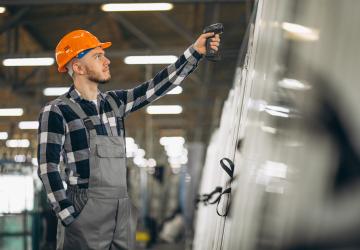
In modern frame production, it is increasingly common for machines to be controlled directly from the software. Cutting lists are automatically generated from the calculation (from work preparation), and profiles are provided with barcodes that guide the product through the entire process. Based on this data, machines automatically perform the correct machining operations. This creates a production process in which each step logically connects to the next and information is never lost. Employees have immediate access to the correct data and can focus on control and optimisation instead of manual input. This not only results in a more efficient workflow but also creates more calm on the shop floor.
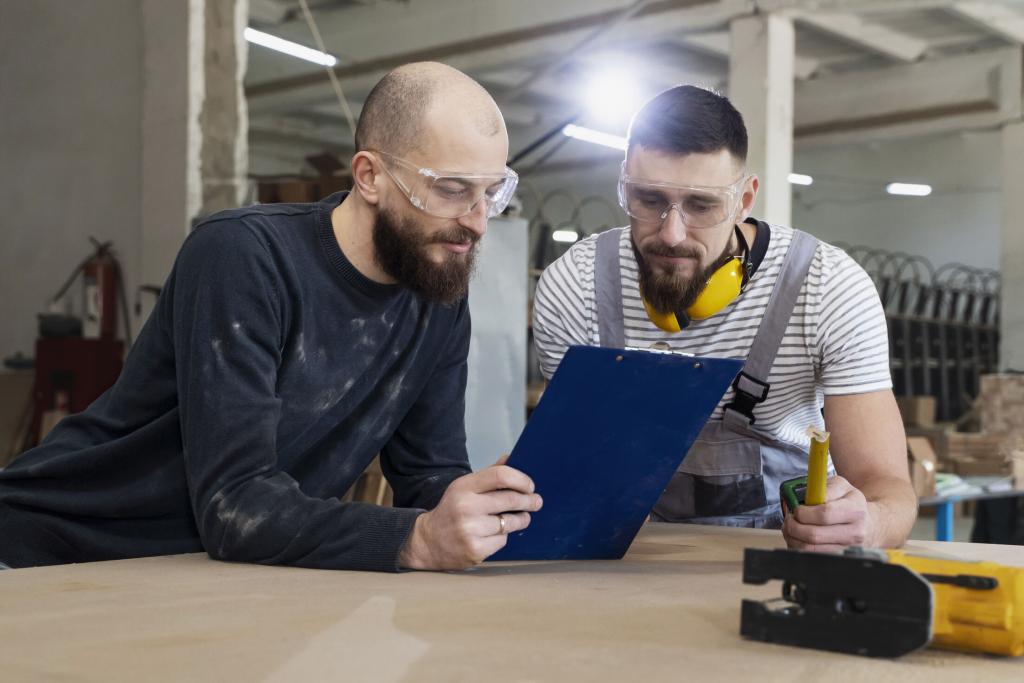
Clear digital work information allows new employees to be trained faster and immediately participate in the process.
Consistency in Every Step of the Process
An important advantage of this way of working is that information remains consistent. What is defined in work preparation appears exactly the same in production. Machining operations match the selected profiles, and material usage follows directly from the configuration. This results in a reliable translation from work preparation to production. Companies that take this step notice that their production not only becomes faster but also more predictable. Deviations decrease and processes become more manageable.
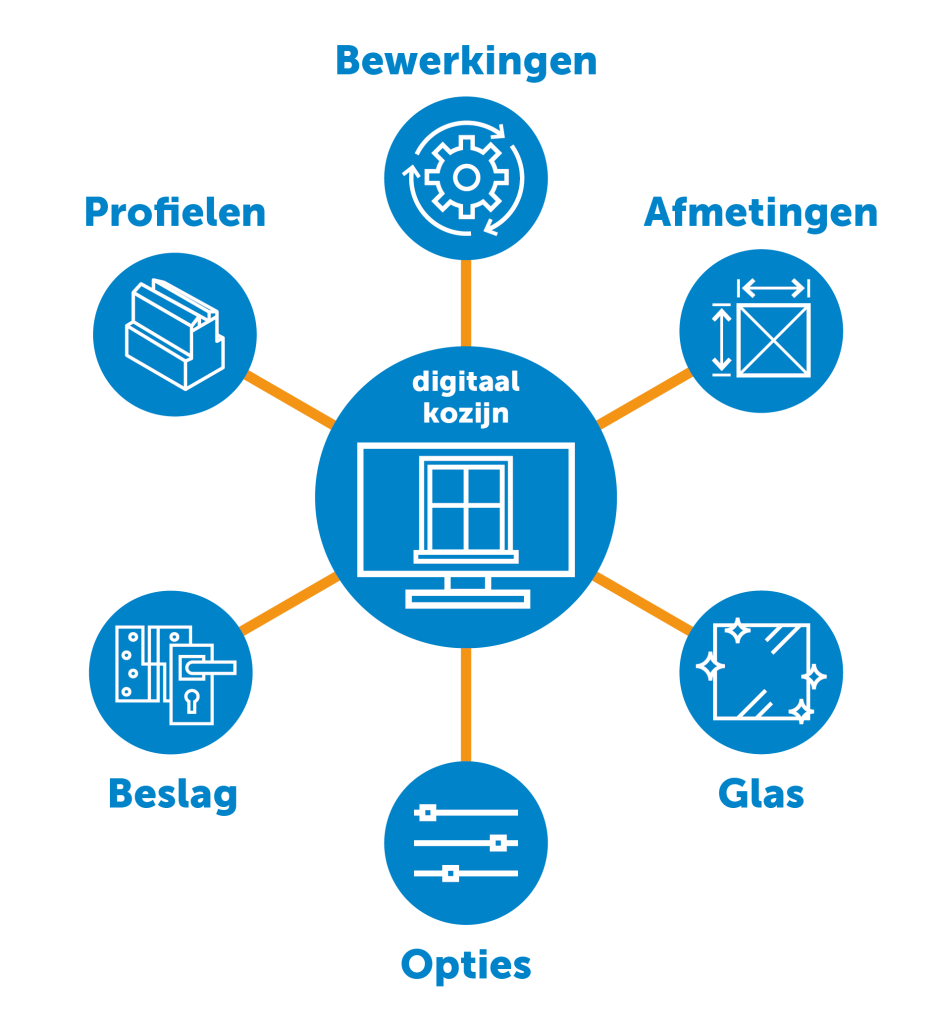
The digital frame model contains all information for an efficient production flow.
Automation Supports Craftsmanship
Automation does not replace craftsmanship on the shop floor—it strengthens it. Because repetitive and precise tasks are taken over, there is more room for work where knowledge and experience make the difference. Think of assessing quality, optimising processes, and solving specific situations. For example, when a frame is damaged, you take a photo of the damage and attach it to the project in MES. This makes the issue clear and easy for all colleagues to find. In practice, automation is used for sawing and milling profiles, preparing assembly, and various machining operations throughout the process. This leads to higher accuracy, less material waste, and more efficient use of people. The result is a production process in which technology and craftsmanship complement and reinforce each other.
Insight and Overview on the Shop Floor
Automation provides not only speed but also insight. Because production is directly linked to the underlying data, it is always visible what is being produced, where an order is located, and which steps still follow. This transparency makes it possible to plan better, switch faster, and deliver more reliably. This is increasingly supported by digital workstations on the shop floor. Employees have direct access to drawings, lists, and instructions, ensuring information is always available and up to date. This prevents misunderstandings and ensures work can continue without interruption. With MES, employees on the shop floor continuously have access to current drawings, production data, and project information.
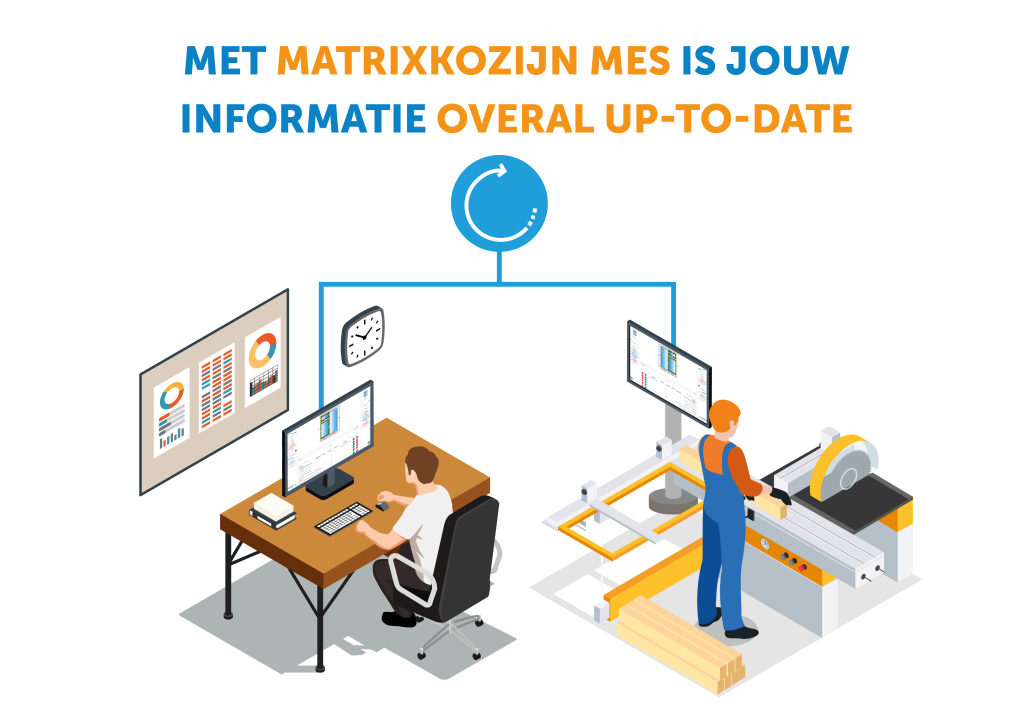
MatrixKozijn MES always up-to-date illustration
A Process That Grows with You
The frame industry is evolving toward smaller series and more variation. Customers expect customisation combined with short lead times. This is exactly where the strength of automation lies. When the foundation is set up properly, the process remains manageable—even when the number of orders increases. Multiple projects can be processed simultaneously without adding complexity. The structure of the process remains intact, meaning growth does not automatically lead to more pressure on the organisation. Automation makes it possible to produce flexibly while maintaining control over quality and lead time.
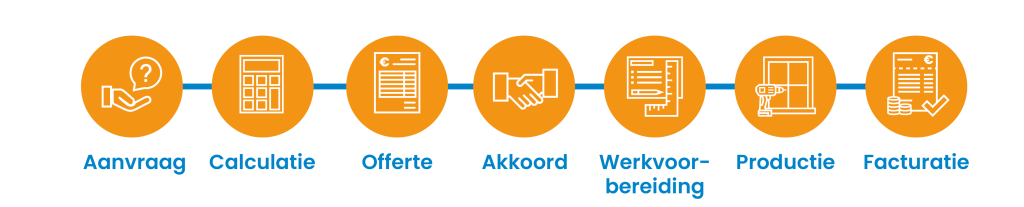
From Separate Steps to One Integrated Whole
The biggest change lies not only in the technology but especially in how processes are organised. Where calculation, work preparation, and production once operated separately, these steps are increasingly brought together into one continuous workflow. Information is recorded once and reused in every subsequent step. This reduces the number of handovers and lowers dependency on individual knowledge. The process becomes more transparent and manageable, giving organisations more control over their daily operations. Automation is therefore not a goal in itself but a means to create structure and ensure processes align logically. Within MatrixKozijn, calculation, work preparation, production, and delivery connect seamlessly. This practical approach is also reflected in the software and guidance. Many employees at Matrix Software have hands-on experience in the frame industry, ensuring the processes naturally align with the daily reality of production companies.
Ready for the Next Step
The step from order to machine is becoming shorter—not by working harder, but by organising smarter. Companies that choose an automatic translation from data to production build a stable and future-proof process. Information flows directly to the shop floor, machines are controlled efficiently, and employees can focus on work where craftsmanship makes the difference. Additionally, this way of working makes it easier to train new employees. Because processes are embedded in the system and information is centrally available, new colleagues can get up to speed more quickly. They work within the same structure and immediately see what needs to be done, without relying on verbal instructions. This creates a production environment ready for growth, variation, and further digitalisation—an environment where clarity, reliability, and efficiency go hand in hand.